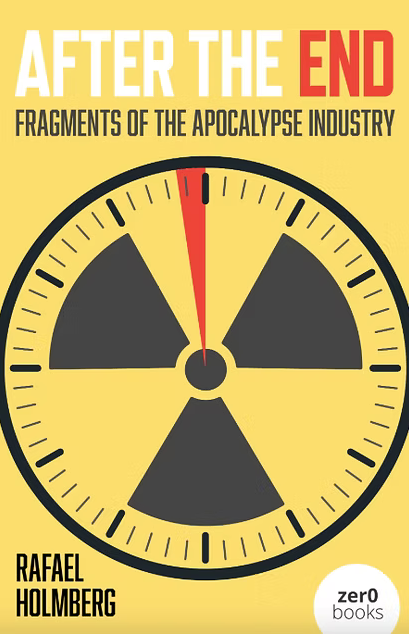

Alecs Ștefănescu a publié une critique de After the End par Rafael Holmberg
A strong core idea, repeated
The book takes Fisher's statement, that it's easier to imagine the end of the world than the end of capitalism, and submits it to one heave question. Can we really imagine the end of the world? Across many pop culture references, across many small chapters, Holmberg argues that we can't even imagine the end of the world. He sketches different ways of failing at imagining the end of the world. For example, in talking about the end, we place ourselves outside of it. Or, in talking about the end, we create the possibility to repeat the destructive behaviours that threaten us and even enjoy them. The point that imagining the end is impossible is repeated across the entire book, with slight variations. It's a very good central point, but, to me, it feels like the author is convinced that one good idea is enough for built an entire book around. …
The book takes Fisher's statement, that it's easier to imagine the end of the world than the end of capitalism, and submits it to one heave question. Can we really imagine the end of the world? Across many pop culture references, across many small chapters, Holmberg argues that we can't even imagine the end of the world. He sketches different ways of failing at imagining the end of the world. For example, in talking about the end, we place ourselves outside of it. Or, in talking about the end, we create the possibility to repeat the destructive behaviours that threaten us and even enjoy them. The point that imagining the end is impossible is repeated across the entire book, with slight variations. It's a very good central point, but, to me, it feels like the author is convinced that one good idea is enough for built an entire book around. Personally, I would have wanted more.