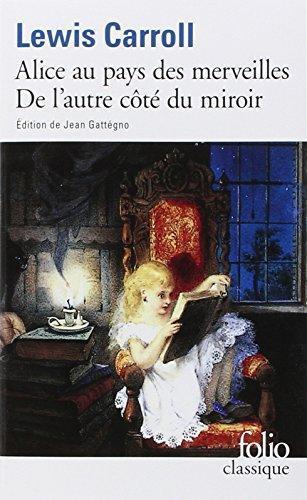
Assise au bord de la rivière, Alice s'ennuyait un peu quand soudain, venu de nulle part, surgit un lapin blanc pressé de regagner son terrier. N'hésitant pas à le suivre, Alice pénètre dans un monde de prodiges et de menaces qui n'est autre que le royaume de l'enfance. Et voici le chat de Cheshire à l'étrange sourire, la terrible Reine de Coeur, le Chapelier fou et le Lièvre de Mars, la Fausse Tortue et le Valet-Poisson... Le chef-d'oeuvre incontesté de l'humour absurde et du non sens. Une histoire inventée par …
Assise au bord de la rivière, Alice s'ennuyait un peu quand soudain, venu de nulle part, surgit un lapin blanc pressé de regagner son terrier. N'hésitant pas à le suivre, Alice pénètre dans un monde de prodiges et de menaces qui n'est autre que le royaume de l'enfance. Et voici le chat de Cheshire à l'étrange sourire, la terrible Reine de Coeur, le Chapelier fou et le Lièvre de Mars, la Fausse Tortue et le Valet-Poisson...
Le chef-d'oeuvre incontesté de l'humour absurde et du non sens. Une histoire inventée par un génie, où la vie n'a plus ni queue ni tête.
Alice's Adventures in Wonderland (commonly shortened to Alice in Wonderland) is an 1865 novel by English author Lewis Carroll (the pseudonym of Charles Dodgson). It tells of a young girl named Alice, who falls through a rabbit hole into a subterranean fantasy world populated by peculiar, anthropomorphic creatures. It is considered to be one of the best examples of the literary nonsense genre. The tale plays with logic, giving the story lasting popularity with adults as well as with children.One of the best-known and most popular works of English-language fiction, its narrative, structure, characters and imagery have been enormously influential in popular culture and literature, especially in the fantasy genre. The work has never been out of print and has been translated into at least 97 languages. Its ongoing legacy encompasses many adaptations for stage, screen, radio, art, ballet, theme parks, board games and video games. Carroll published a sequel in 1871, titled Through the Looking-Glass, and a shortened version for young children, The Nursery "Alice", in 1890.
4 1/2 stars—the half removed only because it ended so abruptly. The author started talking about Hell in 20th century film, briefly discussed Aliens as metaphor...I turned the page...and there were the Acknowledgements and the Bibliography. What happened? Where’s The Exorcist? Where’s The Exorcism of Emily Rose, its motifs of Mary as Intercessor and sufferer as example rampant throughout the book? And those are the easy grabs. Very odd. Otherwise a fascinating book that has lined up about ten more books for me to read, and those are the most fun nonfiction books to read, aren’t they?