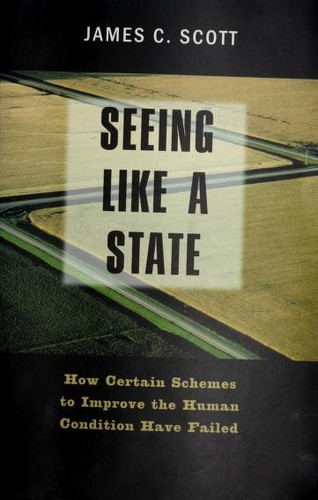

Léo Varnet a publié une critique de Seeing Like a State par James C. Scott (Yale Agrarian Studies)
Interesting but uneven
3,0 stars
The book’s premise is compelling: how the state, in its top-down, technocratic quest to count, normalize, and optimize (often ignoring local particularities and local knowledge) ends up creating dysfunctional systems. James C. Scott explains in the preface that this research theme emerged indirectly, as he pulled at the threads of other research projects. This origin is palpable in the book itself with examples that often feel disproportionately detailed when a few pages would have sufficed. Similarly some chapters feel entirely out of scope, like the one discussing the role on informal knowledge in science (but only touching the surface of the topic). That said, the book also brings up very interesting ideas. One of the most striking is the notion that technocrats are not really driven by a desire to make processes more efficient. Instead, they often seek an "aesthetic" of science as a means of legitimizing their actions, regardless …
The book’s premise is compelling: how the state, in its top-down, technocratic quest to count, normalize, and optimize (often ignoring local particularities and local knowledge) ends up creating dysfunctional systems. James C. Scott explains in the preface that this research theme emerged indirectly, as he pulled at the threads of other research projects. This origin is palpable in the book itself with examples that often feel disproportionately detailed when a few pages would have sufficed. Similarly some chapters feel entirely out of scope, like the one discussing the role on informal knowledge in science (but only touching the surface of the topic). That said, the book also brings up very interesting ideas. One of the most striking is the notion that technocrats are not really driven by a desire to make processes more efficient. Instead, they often seek an "aesthetic" of science as a means of legitimizing their actions, regardless of practical outcomes. This can lead to absurdities, such as moving an entire building by 2 meters just for the sake of aligning it with others, or even to outright disasters, as in the case of the urban planning of Brasilia, or the forced collectivization of farms in the USSR.