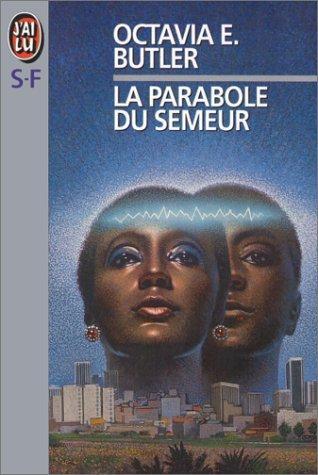
Parable of the Sower is a 1993 science fiction novel by American writer Octavia E. Butler. It is a post-apocalyptic science fiction novel that provides commentary on climate change and social inequality. The novel follows Lauren Olamina, a young woman who can feel the pain of others and becomes displaced from her home. Several characters from various walks of life join her on her journey north and learn of a religion she has crafted titled Earthseed. In this religion, the destiny for believers is to inhabit other planets. Parable of …
Parable of the Sower is a 1993 science fiction novel by American writer Octavia E. Butler. It is a post-apocalyptic science fiction novel that provides commentary on climate change and social inequality. The novel follows Lauren Olamina, a young woman who can feel the pain of others and becomes displaced from her home. Several characters from various walks of life join her on her journey north and learn of a religion she has crafted titled Earthseed. In this religion, the destiny for believers is to inhabit other planets. Parable of the Sower was the winner of multiple awards, including the 1994 New York Times Notable Book of the Year, and has been adapted into a concert and a graphic novel. Parable of the Sower has influenced music and essays on social justice. In 2021, it was picked by readers of the New York Times as the top science fiction nomination for the best book of the last 125 years.Parable of the Sower is the first in an unfinished series of novels, followed by Parable of the Talents in 1998.
Je suis pas un grand amateur de SF post-apo, mais je dois dire que je me suis laissé prendre. Alors que la plupart des classiques du genre sont orientés sur les stratégies de survie et le dilemme de la confiance en l'autre dans un monde qui s'effondre, donnant souvent une tonalité individualiste, Butler renouvelle un peu le genre en rajoutant une dimension plus politique, et la foi dans un possible monde en commun. Même si la description des États unis en proie aux hordes de meurtriers violeurs est éprouvante, cet espoir qui porte le personnage principal donne envie de lire la suite.
Il s'agit d'une forme de récit de science-fiction où le monde, et ici on parle des États-Unis, est confronté à un dérèglement climatique avec un manque d'eau terrible. Et cela entraîne de profonds changements dans la vie sociale, notamment avec la présence d'armes à feu qui font prévaloir une forme de droit de la force. Le plus fort, le plus armé, prend ce qu'il veut au plus faible, les anciennes règles de droit maintenues par la police ou la Garde Nationale n'ont plus vraiment cours et des associations sous forme de gangs apparaissent. Les groupes de personnes issues des classes moyennes tentent de se regrouper dans des propriétés entourées de murs, avec des armes et de déplaçant en groupes pour pouvoir faire front mais ils ne peuvent résister aux gangs violents, surtout lorsqu'ils sont drogués et brûlent tout, ou aux pillards qui n'ont plus rien. Seuls des grandes fortunes qui …
Il s'agit d'une forme de récit de science-fiction où le monde, et ici on parle des États-Unis, est confronté à un dérèglement climatique avec un manque d'eau terrible. Et cela entraîne de profonds changements dans la vie sociale, notamment avec la présence d'armes à feu qui font prévaloir une forme de droit de la force. Le plus fort, le plus armé, prend ce qu'il veut au plus faible, les anciennes règles de droit maintenues par la police ou la Garde Nationale n'ont plus vraiment cours et des associations sous forme de gangs apparaissent. Les groupes de personnes issues des classes moyennes tentent de se regrouper dans des propriétés entourées de murs, avec des armes et de déplaçant en groupes pour pouvoir faire front mais ils ne peuvent résister aux gangs violents, surtout lorsqu'ils sont drogués et brûlent tout, ou aux pillards qui n'ont plus rien. Seuls des grandes fortunes qui organisent des exploitations d'esclaves avec des milices armées, s'en sortent. C'est un roman sur le survivalisme, où un groupe menée par une jeune femme Lauren, qui est atteinte d'une forme d'hyperempathie et qui développe une pensée religieuse sur la base de la parabole du Semeur, tente de recréer une forme de communauté plus ou moins autonome dans ce 1er tome de la série des paraboles.
Pour ma part, l'aspect "religieux" ne fait pas partie de mes préoccupations, mais je constate qu'il en est aussi question dans des romans de science-fiction comme dans celui de Margaret Artwood (les servantes écarlates). Le roman montre bien comment les relations entre les gens peuvent évoluer lorsque la règle du plus fort s'installe et détruit la solidarité qui permet aux groupes respectueux de ce principe de continuer à vivre dans un monde hostile. D'autres aspects sont traités comme le racisme, ou la domination masculine.
It's certainly not a fun book, but it's extremely engaging, despite the bleakness of the slow-apocalypse setting and story.
What makes this apocalypse so horrifying, and the story so engaging, is how matter-of-fact Lauren is in describing everything in her diary. It's the world she grew up in, so it's normal to her, though she can see clearly even at 14 that it's unsustainable. There's a sharp generational divide between those who remember what things were like before, but all that is just history to her.
Lauren's present is hopeless and brutal, but her diary doesn't linger on the ever-present brutality like a horror novel would. She acknowledges it, of course, but she's focused on how to survive it so she can build something better.
The setting resonates so well today in part because the societal fears of the 1980s that Butler was extrapolating from are the …
It's certainly not a fun book, but it's extremely engaging, despite the bleakness of the slow-apocalypse setting and story.
What makes this apocalypse so horrifying, and the story so engaging, is how matter-of-fact Lauren is in describing everything in her diary. It's the world she grew up in, so it's normal to her, though she can see clearly even at 14 that it's unsustainable. There's a sharp generational divide between those who remember what things were like before, but all that is just history to her.
Lauren's present is hopeless and brutal, but her diary doesn't linger on the ever-present brutality like a horror novel would. She acknowledges it, of course, but she's focused on how to survive it so she can build something better.
The setting resonates so well today in part because the societal fears of the 1980s that Butler was extrapolating from are the same fears that have been re-stoked to create our modern political moment, and the problems she focused on remain unsolved. (I go into a bit more literary analysis on my website if you're interested in that sort of thing.)
I’m just 20% in and the events going on in this story describe the realities of today, even the months in 2025 are about right, too close for comfort. Scary…
Me resulta difícil concretar per què m'ha fascinat tant. La pobresa, la desesperació i la mort regnen en un futur massa proper (en anys i en versemblança), però sempre hi ha un bri d'esperança.
Per molt que diguin de les segones parts, no puc esperar a llegir Parable of the Talents!
finally a post-apocalyptic story that says something meaningful
5,0 stars
The best "post-apocalyptic" story I've ever come across. So good, it puts most of the others to shame.
Also just a great story on its about community, religion, and how to believe in and work for a better world.
I wish it was recommended reading in school.
Which feels like a cheesy thing to say in a review about dystopian fiction, but I genuinely didn't realize this book was published in the year 1993 until I read Butler's biography at the back and realized she passed away in 2006. It feels... pertinent
Others have said this is a pretty grim novel. I agree. It hurt to read, quite often. I feel like I've mostly moved out of my dystopian fiction era but this one hooked me a lot harder than most I've read. I haven't finished a book this quickly in quite a while.
I think Parable of the Sower has a lot to say about eco-fatalism, as well as the many "fatalisms" of neoliberalism in general, which it delivers on very well. I also felt like it would have a lot to say about the value of religion, divorced from the way people in …
Which feels like a cheesy thing to say in a review about dystopian fiction, but I genuinely didn't realize this book was published in the year 1993 until I read Butler's biography at the back and realized she passed away in 2006. It feels... pertinent
Others have said this is a pretty grim novel. I agree. It hurt to read, quite often. I feel like I've mostly moved out of my dystopian fiction era but this one hooked me a lot harder than most I've read. I haven't finished a book this quickly in quite a while.
I think Parable of the Sower has a lot to say about eco-fatalism, as well as the many "fatalisms" of neoliberalism in general, which it delivers on very well. I also felt like it would have a lot to say about the value of religion, divorced from the way people in my life and I suspect many others in the west tend to equate religion with Christianity. It delivered on the former part, but not so much the latter in my opinion. Still very compelling, and very well written nonetheless.
maybe I was expecting too much because I'd heard about it in adrienne maree brown and Autumn Brown's podcast and thought this was going to be extremely mind-blowing. I kept expecting the story to go somewhere, to develop in some direction but it just kept being a bleak, lost earth and people trying to just survive on it. seemed to me like the plot just fizzled out.
Cuando estaba más joven la ficción y la ciencia ficción eran espacios que me hacían sentido para conectar con la imaginación y con la posibilidad de pensar y sentir la vida fuera de límites que percibía en mis presentes.
Como estos ámbitos de la literatura no resonaban tanto en algunas de mis redes cercanas, me alejé un poquito de éstos por algunos años y me metí a libros más teóricos y "serios". Pero desde que empecé a leer a Octavia Butler, por recomendación de una amiga, volví a interesarme en textos de (ciencia) ficción.
Octavia reflexionó sobre la ausencia/invisibilización de mujeres negras en un contexto donde predominaba una ciencia ficción de escritores hombres y blancos. También propuso escenarios que abordaran los pasados-presentes-futuros y que estimularan la imaginación y la creatividad como posibilidades ante las crisis que seguimos viviendo.
En Parable of the sower, Octavia tejió temas como: …
Cuando estaba más joven la ficción y la ciencia ficción eran espacios que me hacían sentido para conectar con la imaginación y con la posibilidad de pensar y sentir la vida fuera de límites que percibía en mis presentes.
Como estos ámbitos de la literatura no resonaban tanto en algunas de mis redes cercanas, me alejé un poquito de éstos por algunos años y me metí a libros más teóricos y "serios". Pero desde que empecé a leer a Octavia Butler, por recomendación de una amiga, volví a interesarme en textos de (ciencia) ficción.
Octavia reflexionó sobre la ausencia/invisibilización de mujeres negras en un contexto donde predominaba una ciencia ficción de escritores hombres y blancos. También propuso escenarios que abordaran los pasados-presentes-futuros y que estimularan la imaginación y la creatividad como posibilidades ante las crisis que seguimos viviendo.
En Parable of the sower, Octavia tejió temas como: sensibilidad hacia otrxs seres; críticas al capitalismo, a las desigualdades socio-económicas, a la explotación y hacia la crisis climática; formas de construir relaciones y comunidades basadas en el reconocimiento mutuo; cercanías y comprensiones diversas con la tierra y la sostenibilidad de la vida (entre muchas otras cosillas).
Algo que me parece muy curioso, es la manera en que Octavia toma aspectos del libro, que como lectora me estuvieron haciendo cierto ruido de forma muy sutil, y los hace evidentes en la secuela (Parable of the talents). Creo que no es sencillo plantear todo un imaginario y luego construir una narrativa que lo replantee o que muestre sus matices, al menos de forma convincente. Por eso, aunque Parable of the sower es un libro que aprecié haber leído, verlo de la mano con Parable of the talents fue aún más apreciable para mí.
Mostly bleak and brutal, but very good. I didn't think I was in the mood for anything dystopian, but I basically couldn't put it down once I started it. Really interesting to watch Lauren Olamina discover/develop her worldview and then share it with others and advocate for it as the book progresses.
The government is useless and we're all gonna get raped and our houses burned down
4,0 stars
Both right-wing and left-wing preppers will find something for them in this book. Written from the POV of a teenager in a life-or-death situation, the book is pretty much on survival mode the entire time, with the accompanying lack of nuance and fear permeating throughout. Still, seems like an important and balanced read.
Butler is just so even and consistent. It's wonderful.
4,0 stars
If you have the stomach to read a book about how to survive an apocalypse right now, this is a banger. As created literary religions go, Earthseed is better than most, and Lauren Olamina is just such a well-written, thoughtful character.
I did not feel invested in any of the characters, but I did find them, their stories, and the setting very interesting. In that way I feel conflicted about this book. Another thing is that I was always expecting things to get worse in the next chapter, as the protagonist realizes early on, so I was anxious about continuing before I would read each time. But because I didn't feel invested in the characters, as shocking as the events were I wasn't too bothered by them.
On a second read, I feel a lot differently than I did the first time around. I can't separate uncomfortable feelings of reading about a teenager basically starting a cult and attracting people who are at their absolute most vulnerable to join. It doesn't sit well with me to read about Lauren's glee to "raise babies in Earthseed." And the intense, intense, dehumanization and otherizing of people using drugs, making them into physically unrecognizable monsters, is something I can't get past. If Lauren has hyper-empathy, and is more sensitive to people in need of help, then why does the buck stop with people using drugs?